

5 Water Safety Tips You Need Before the Summer
Everyone’s had “the talk” before getting in the pool – those random water safety tips that have been passed down for generations.
Starting your research on water safety now puts you ahead of the curve. True water safety goes beyond simply following rules. It’s about understanding which guidelines are genuinely effective and recognizing the crucial role that summer swim lessons play in self-confidence.
This is why parents across Long Island and Connecticut start booking swimming lessons in the spring, not summer. When the pools open and the summer swim season begins, kids will be eager to jump in, and you can relax because they’ll know exactly what to do!
Tip 1: Swimsuit Color Actually Matters…A Lot
This is one of those water safety tips most parents have never heard, but once you see it, you can’t unsee it.
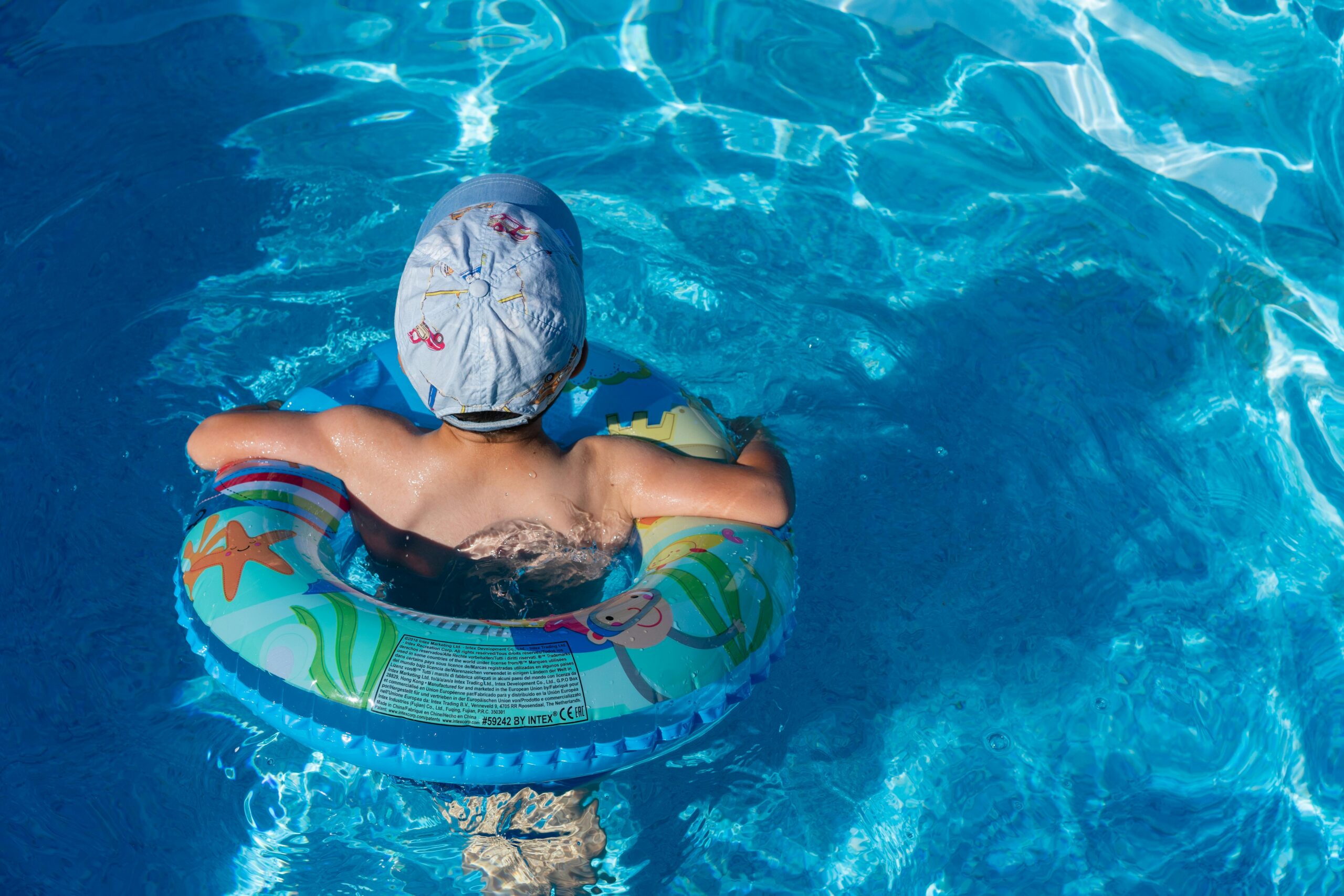
Most of us pick our kids’ swimsuits based on style or whatever’s on sale. But the color of that swimsuit can make a real difference in an emergency. A 2021 visibility study by ALIVE Solutions Inc., a water safety company, tested 14 swimsuit colors in both pools and open water. The results were clear: white and light blue swimsuits nearly disappeared underwater, while neon pink and neon orange were the most visible in pool settings.
Crises can happen in an instant. The American Lifeguard Association’s director of health and safety confirmed it: “bright, contrasting colors like neon yellow, orange, and pink make it significantly easier for lifeguards and parents to spot a child quickly.” Dark colors can also blend into the pool floor, being mistaken for shadows, leaves, or debris. And in open water like lakes, visibility is dramatically reduced across nearly all colors.
Try to remember, next time you’re shopping for swimwear this season, think neon first. It’s a simple water safety tip with a potentially life-saving impact.
Tip 2: You Don’t Have to Wait 30 Minutes After Eating
Raise your hand if your grandmother enforced the 30-minute after-eating rule. Almost everyone has heard of it, and almost everyone has passed it down without question.
Here’s the reality: there is no scientific evidence that swimming after eating is dangerous or increases the risk of drowning. The International Life Saving Federation reviewed the available research and concluded that food intake restrictions before swimming are unfounded.
The original fear was that digestion redirects blood to the stomach, leaving muscles without enough to function. But as Duke Health explains, the body only diverts a small amount of extra blood to aid digestion, nowhere near enough to affect how arms and legs work. The human body is very capable of handling both at the same time.
Your biggest actual risk after eating and swimming? A minor cramp or discomfort if the meal was very large. That’s it.
So now you know: a light snack before your summer swim lesson or pool time is perfectly fine. If your child just finished a big meal, waiting a bit for comfort makes sense, but it is not a safety requirement!
Tip 3: What Water Distress Actually Looks Like (And How to Spot It Fast)
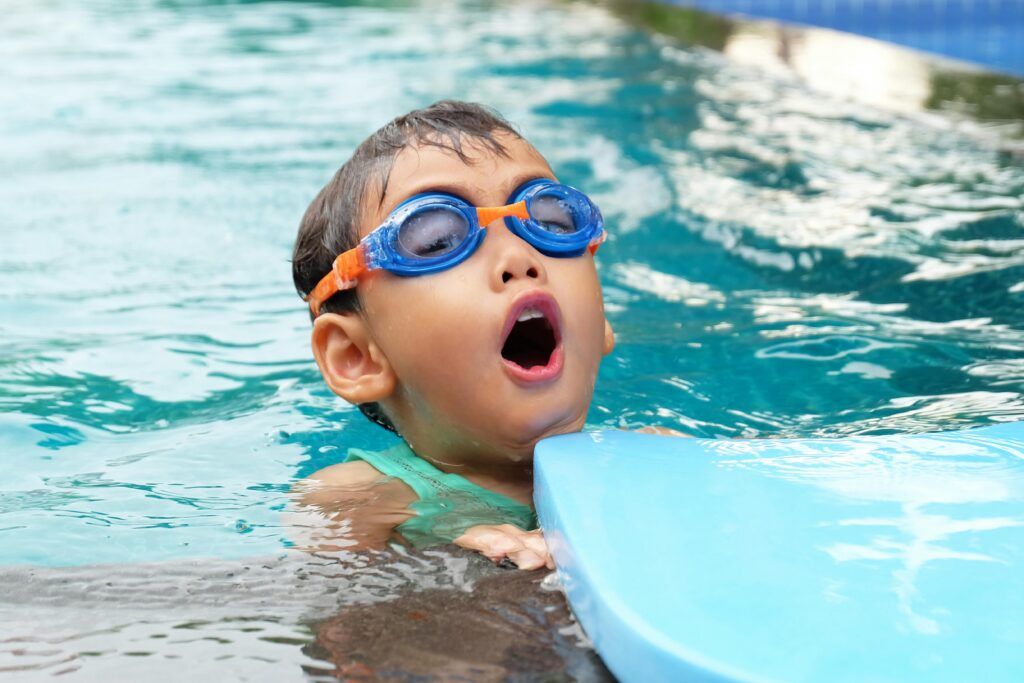
Of all the water safety tips on this list, this one is the most important. Drowning does not look like what you see in movies. There is no dramatic splashing, no screaming, no waving for help.
What researchers call the “Instinctive Drowning Response,” first documented by Dr. Francesco A. Pia, Ph.D., is quiet and fast. A drowning person is physically unable to call out for help because the body prioritizes breathing above everything else. Their mouths bob just at the water’s surface. Their arms push downward instinctively, so they cannot wave or reach for help. And it happens quickly – a drowning person can only struggle on the surface for 20 to 60 seconds before going under.
One of the most sobering statistics: of the approximately 750 children who will drown this year, about half will do so within 25 yards of a parent or other adult, and in some of those cases, the adult will be watching but have no idea what is happening.
Signs to watch for in the water:
- Head low, mouth at or just below the surface
- Glassy or unfocused eyes, or eyes closed
- Body upright in the water with no visible leg kick
- Hair over the face with no attempt to move it
- Appears to be treading water but going nowhere
- Silence. No response when you call out means trouble
When in doubt, call out: “Are you okay?” If they can answer, they likely are. A blank stare or no response means act immediately. Keep your eyes open, and turn your listening ears on – children playing in water make noise. When they go quiet, check on them right away!
Tip 4: The Numbers Are More Serious Than Most Parents Realize
Water safety tips only go so far if parents don’t understand why they matter. The statistics put it in perspective:
- Drowning is the leading cause of death for children ages 1 to 4 in the United States (CDC)
- For children ages 5 to 14, it is the second leading cause of unintentional injury death, behind motor vehicle accidents (American Red Cross)
- An average of 4,500 people drowned per year in the U.S. from 2020 to 2022 — about 500 more per year than in 2019 (CDC)
- Children ages 5 and under represent 75% of child drowning deaths and 77% of nonfatal drowning injuries (CPSC / Pool Safely, 2024)
- 81% of fatal child drownings happen in residential settings, most often home pools (CPSC)
- Formal swim lessons are associated with an 88% reduced risk of drowning in children ages 1 to 4 (Brenner, 2009)
That last number is significant. Swim lessons are one of the most effective drowning prevention strategies available to families. Water safety is a year-round concern, and starting swim lessons early is one of the most impactful things you can do for your child or even yourself.
Tip 5: Water Safety Means Building Confidence
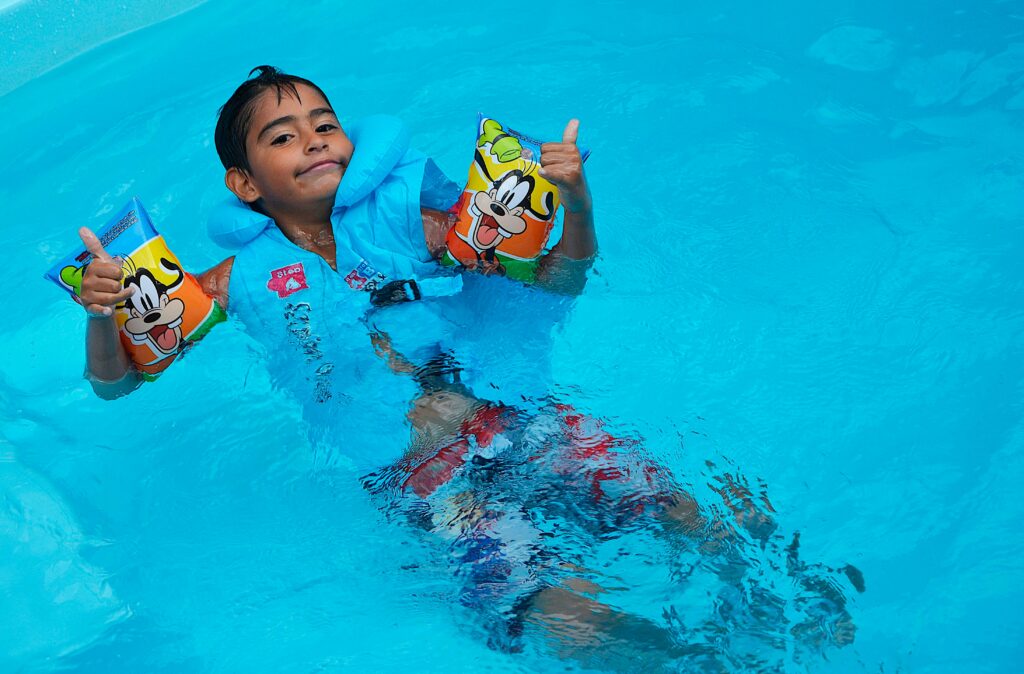
Many parents think of swim lessons as preparation for pool parties or summer camp. While that’s true, water confidence is one of the most powerful safety tools a child can have, and one of the most underrated water safety tips there is.
When kids are comfortable in the water, like when they know how to float, tread water, and move safely, they are far better equipped to manage unexpected situations. A child who panics after slipping into deeper water is at much greater risk than one who knows how to calmly float or get to the edge.
Water confidence builds gradually. You cannot rush it, and you cannot build it in a week before vacation. This is why consistent, year-round lessons like the swimming lessons offered through urSwim, are so effective! Kids develop skills steadily, at their own pace, and in a familiar and controlled environment.
Believe it or not, water confidence matters for parents too! Adults who aren’t comfortable in the water are less likely to get in with their children and less able to respond in an emergency. urSwim offers adult swim lessons for exactly this reason. Building your own confidence is part of keeping your family safe during summer swim season and beyond.
Find Your Summer Swim Lessons in Long Island
Summer schedules fill fast. By the time pools open and summer swim lessons are in full swing, instructors are booked and availability is limited. Starting Long Island swimming lessons in spring gives your child time to build real skills at a comfortable pace, without the pressure of a trip or pool party already on the calendar.
At urSwim, our year-round indoor lessons are designed for every swimmer – from baby beginners to kids and parents looking to refine their technique. Our certified instructors serve families across Long Island and Connecticut, bringing expert, personalized instruction to you or to one of our indoor locations located at LA Fitness.
Long Island, New York:
- Huntington
- Farmingville
- Port Jefferson (Now Open!)
Connecticut:
Whether your goal is water safety, water confidence, or both by signing up for swim lessons, we can help your family get there before summer arrives!
Ready to get started? You can sign up for our trial lessons near you! Visit urswim.com to book your first lesson and make sure you sign up for our Freestyle Newsletter for all our special offers, promotions, and upcoming events!

No matter your swimming goals, urSwim's indoor swim classes in Fairfield County, CT and Long Island, NY can help you get there, stroke by stroke.

Start Swimming with urSwim!


