


How to Create Healthy Winter Routines for Kids on Long Island
It’s 3:00 PM on a Tuesday in January, and it’s already getting dark outside. Your kids just got home from school, dropped their backpacks in the exact spot you’ve asked them not to a hundred times, and announced they’re starving. You offer three different snacks. They reject all of them.
Two hours until dinner. Two very long hours.
If this sounds familiar, you’re not alone. January on Long Island has a specific weight to it. The holiday excitement is completely gone, the weather is reliably miserable, and everyone is just… indoors. A lot. The days feel harder to get through, even though nothing is technically different from December.
Except everything feels different, doesn’t it?
The Thing About January That Nobody Warns You About
December is chaotic, but it carries its own momentum. There are parties, special events, early dismissals, and just enough excitement to keep kids moving through the broken routine. Then January hits and removes every single cushion at once.
School is back to full intensity. Homework returns. The schedule is rigid again. But winter is still very much here, which means outdoor play is limited, recess gets cut short when it’s too cold, and kids are being asked to sit still and focus at the exact moment they’re moving the least.
And here’s the kicker: you can’t really fix it by just “sending them outside to burn off energy” like you would in September.
So all that energy has nowhere to go. You see it around bedtime when they can’t settle. You see it in the meltdowns over small things. You see it in yourself when you realize you’ve been counting down the hours until they’re asleep.
This is the point where parents start googling “indoor activities for kids” at 9 PM, feeling like they should be doing more but not knowing what that even looks like.
What Actually Helps (And It’s Simpler Than You Think)
When people talk about “healthy winter routines,” it sounds like a lot of work. Like you need to create some color-coded schedule with five different activities and meal prep and family game nights and god knows what else.
But that’s not what works. What actually helps in January is having one thing that happens the same way every week. One activity. One anchor point. Same time, same place, same rhythm.
It sounds almost too simple, but there’s real relief in knowing that every Tuesday at 5 PM or every Saturday at 9 AM, this one thing happens. Your kids know it’s coming. You don’t have to convince anyone or negotiate or figure out what to do. It just… happens.
For a lot of Long Island families, that anchor ends up being some kind of indoor activity. Dance class, gymnastics, martial arts, whatever fits. The specific activity matters less than the consistency of it.
But here’s what we’ve noticed over the years: a lot of families end up choosing swim lessons. And once you understand why, it makes complete sense.
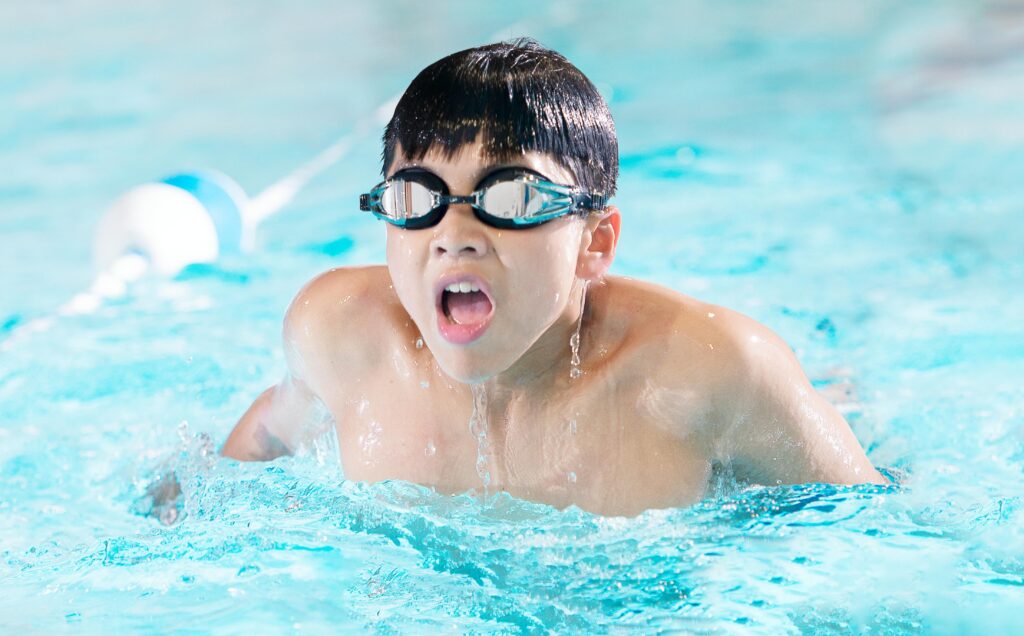
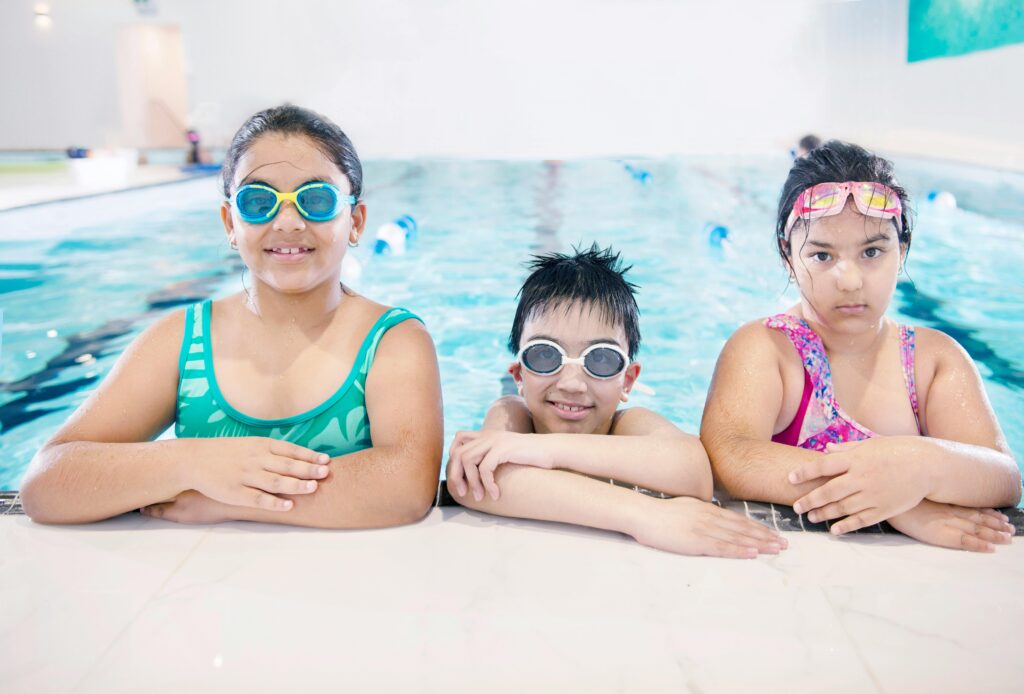
Why Swimming Works So Well When Everything Else Feels Hard
Think about what you actually need from a winter activity. You need your kids to move their bodies in a real way, not just run around a gymnasium for 20 minutes. You need it to happen regardless of the weather. Ideally, you want an activity that helps kids use enough physical and mental energy during the day so that when bedtime comes, they are naturally ready to sleep instead of wide awake and resisting.
Swimming checks every single box.
First, it offers a true indoor reset. The moment kids walk in, the outside world fades a bit. There’s a clear transition from school and homework into something active and focused, which helps kids mentally shift before the evening even begins.
Second, they’re actually moving the entire time. Swimming isn’t a sport where kids stand around waiting for their turn or sit on a bench. They’re in the water, using every muscle, constantly moving from the moment the lesson starts until it ends. That continuous full-body movement is exactly what winter takes away from kids.
Third, and this is the part that surprises parents, swimming has this calming effect that shows up later. Something about the water pressure, the rhythmic breathing, the focus it requires… kids come out of the pool genuinely tired in a good way. Parents tell us all the time that swim lesson days are noticeably easier evenings. Bedtime isn’t a battle. Everyone just… settles.
How To Know If You’re Choosing The Right Thing
Not every activity is going to work, and not every swim program is created equal. Here’s what actually matters when you’re trying to figure out where to sign up:
The schedule should be consistent all winter long. If lessons keep getting moved around or canceled for holidays you didn’t know about, it’s not really creating routine. Look for programs that run straight through January, February, and March without disruption.
Class sizes matter more than you think. If there are 10 kids in a class with one instructor, your child isn’t getting real attention. They’re just one more kid in a crowded pool. Look for small classes (four kids maximum per instructor) where your child is actually known, not just managed.
The Mistakes That Make Winter Harder
We’ve seen families try a lot of different approaches over the years, and some patterns make things worse instead of better.
The biggest one is overscheduling. When kids seem restless or bored, the instinct is to fill every afternoon with something. Monday is art class, Tuesday is soccer, Wednesday is tutoring, Thursday is music, Friday they’re exhausted and melting down. That’s not routine, that’s chaos with a calendar.
Start with one thing. If that goes well and everyone’s handling it easily, you can always add more. But start simple.
Another mistake is choosing based purely on convenience. The closest place or the cheapest option isn’t always the right answer. If the environment feels off or your kid clearly doesn’t like it, forcing it for two more months because you already paid isn’t going to create the routine you need. It’s okay to try something and then switch if it’s not working.
And lastly, expecting kids to be excited immediately. Most kids push back on new things at first, even things they’ll end up loving. Give it a month before deciding it’s not a fit. The first couple of weeks are about getting comfortable, not about enthusiasm.
What You Should Actually Do This Week
If you’re reading this and thinking, “Okay, this sounds like what we need,” here’s your next step: go observe a class before signing up for anything.
Any good swim program will let you come watch a lesson in action. You can see how instructors interact with kids, what the class size actually feels like, whether the environment is calm or chaotic, and if your kid seems interested or completely checked out.
That one visit will tell you more than any website or brochure ever could.
If you decide swimming feels right, start with one day a week. Pick the time that fits most naturally into your schedule. Keep that same time every single week. This is not the moment to be flexible. Consistency is the entire point.
And give it four weeks before making any decisions. Week one will feel awkward. Week two will be slightly better. By week three, your kid will walk in without hesitation. Week four is when you’ll know if this is your winter routine or if you need to try something else.
Why urSwim Will Be Worth Visiting
Every family builds winter routines a little differently. What tends to help most is choosing something that feels steady, warm, and easy to return to each week.
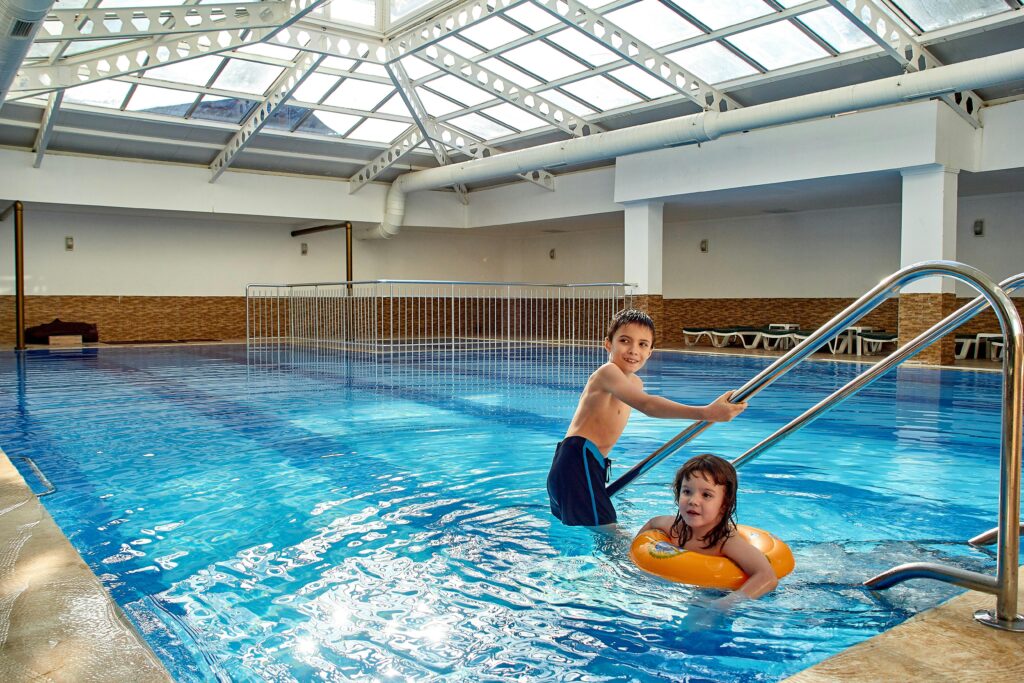
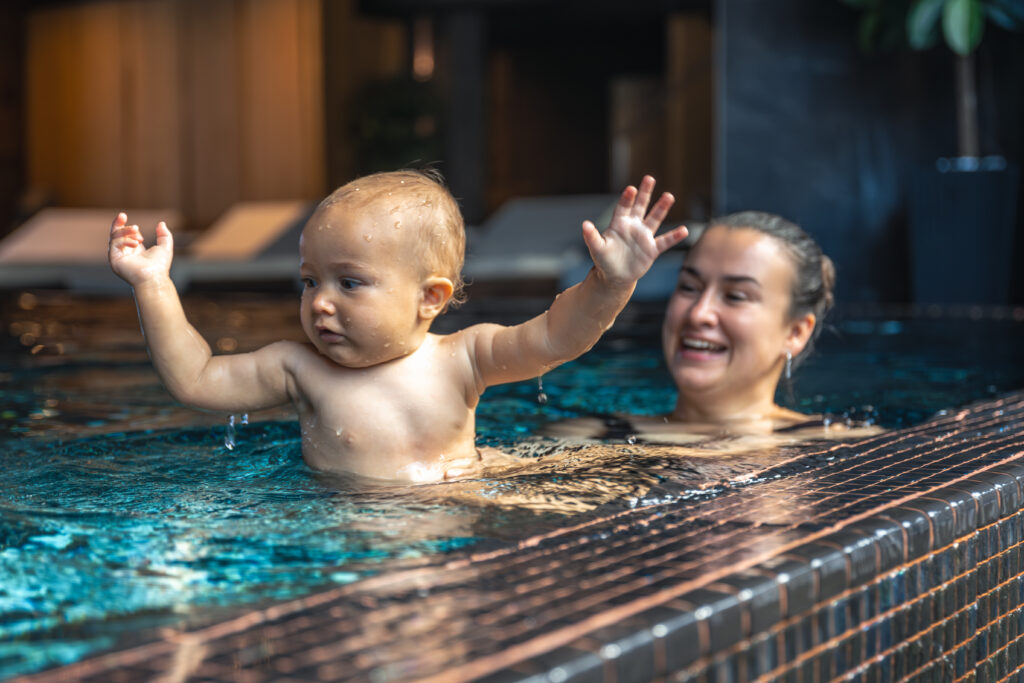
For many families across Long Island and Connecticut, swimming fits naturally into that rhythm. Indoor pools remove the weather factor, and the structure of a weekly class gives the week a predictable anchor without overloading the schedule.
At urSwim, we see families use swim lessons simply as one consistent winter activity. Pools stay warm, classes run regularly through the season, and kids know what to expect when they walk in. That familiarity is often what makes the difference in winter, not the activity itself.
It is not about pushing skills or filling every afternoon. It is about finding one reliable part of the week that helps kids move, settle, and transition more easily into evenings at home
Why January Routines Tend to Stick
The routines families build now often carry forward without much effort. Kids who feel comfortable in familiar environments tend to approach new seasons with more confidence. When spring arrives, transitions feel easier because there’s already a sense of stability underneath.
January doesn’t need to be exciting or productive. It just needs to work.
For some Long Island families, that steadiness comes from swimming. For others, it comes from different indoor activities that fit their rhythm. At urSwim, we’re one of many options families choose to help winter feel a little warmer and more manageable.
The goal isn’t to fill every day. It’s to find one or two things that make this season work for your family and let the rest fall into place.
And if the days still feel long, that’s okay too. Spring will come. For now, steady is enough.
Want to see if urSwim is right for your family? Purchase a trial lesson for $19. Visit our website or call us to find a time that works. We’ll take it from there.


No matter your swimming goals, urSwim's indoor swim classes in Fairfield County, CT and Long Island, NY can help you get there, stroke by stroke.

Start Swimming with urSwim!


