

Is It Too Late to Start Swim Lessons This Summer?
No. Mid-July is not too late to start summer swim lessons. For a lot of families, it’s actually the smartest time to start. There’s still real time on the calendar, real progress to be made, and a real reason to look forward to.
Maybe you’ve been telling yourself you’d get around to it. The pool opened, the days got busy, and now half of July is already gone. Your neighbor’s kid is diving off the low board. Your child still wants a hand every time the water passes his shoulders.
That gap doesn’t mean you missed your window. It means the window is narrower than it was a couple of months ago, and narrower is fine. Kids build real water comfort and skill faster than most parents expect, especially with focused, one-on-one instruction instead of a crowded group class.
By the time school starts back up, your child could be a different swimmer than they are today. Not ready for competitive strokes, necessarily. But steady, comfortable, and able to actually enjoy the water instead of gripping the wall.
That’s what the next few weeks are for.
How Many Weeks of Summer Are Actually Left?
More than you’d think. On Long Island and in Connecticut, most school districts don’t start back up until after Labor Day, which puts early September as the real deadline. From mid-July, that’s still six to eight weeks.
Six to eight weeks is enough time for a lot to change. It’s not enough to turn a beginner into a competitive swimmer, and that’s not the goal here. It’s enough for a nervous kid to stop clinging to the wall. Enough for a beginner to go from tolerating the water to asking to get back in. Enough for a stronger swimmer to clean up a stroke before fall sports pick back up.
The families who wait until August to think about this usually aren’t out of time. They’re just further into a summer that felt too full to interrupt. But a few weeks of consistent lessons, even one or two sessions a week, is still enough to make progress.
What Progress Can You Expect from Summer Swim Lessons?
It depends on where your child is starting, but the timelines are more encouraging than most parents expect.
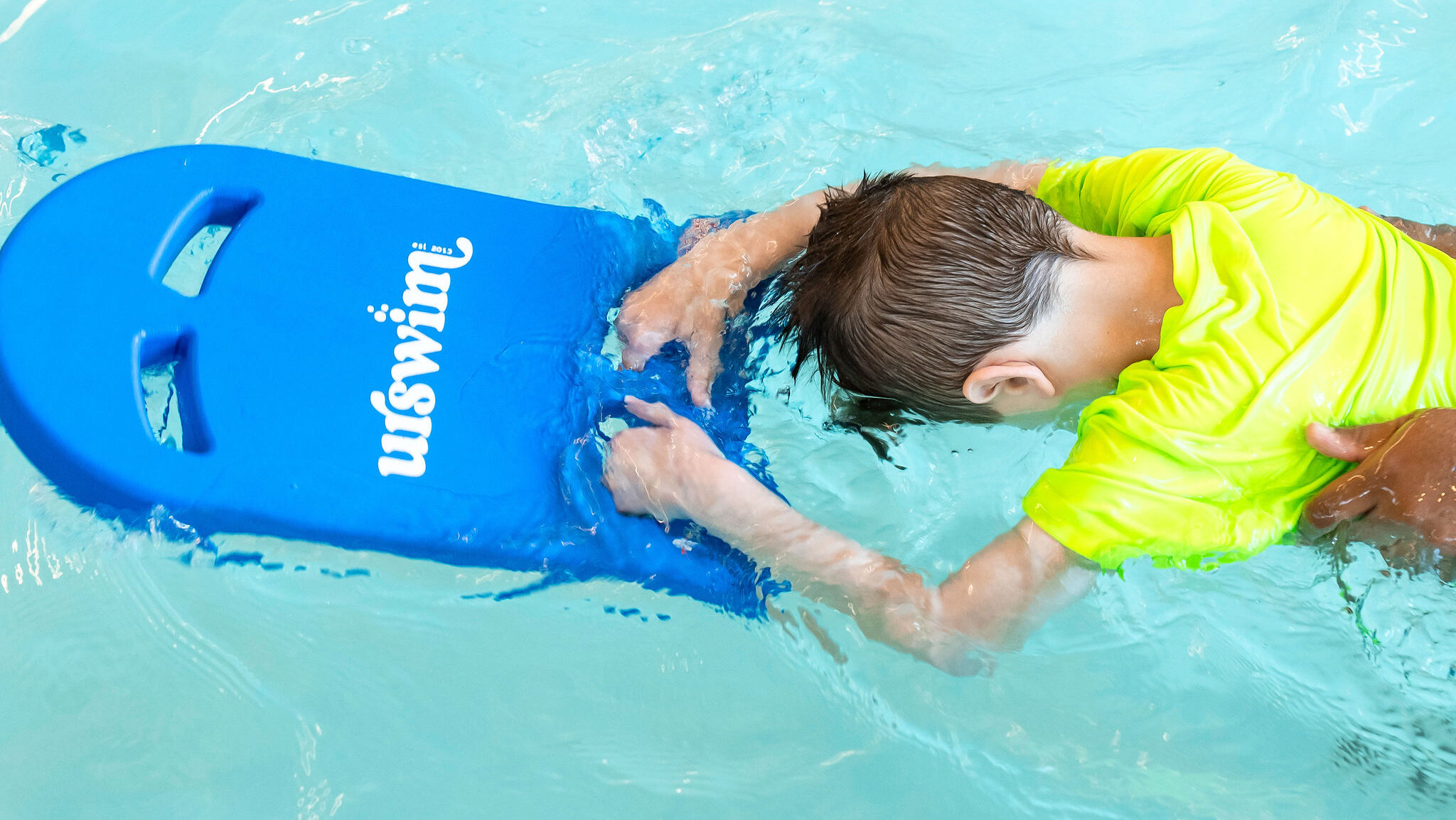
Complete beginners, kids who tense up around water or still need a hand to feel steady, usually show real comfort within 4 to 6 lessons. That’s not mastery, but it’s a big shift from bracing against the water to actually being in it: floating without panic, putting their face in, kicking without being told to every time.
Kids with some experience move faster once the fundamentals are already there. A child who can float and paddle awkwardly often clean up their freestyle or backstroke within a few weeks of consistent lessons, especially with one-on-one attention instead of splitting time across a group.
Stronger swimmers use summer swim lessons differently. Less about survival skills, more about technique: tightening a stroke, building endurance, getting ready for a fall swim team tryout. That kind of refinement can happen in a handful of focused sessions.
None of this replaces supervision, and it never will. But it matters. Participating in formal swimming lessons can reduce the risk of drowning among children and young adults, according to the CDC, and that protection doesn’t come with an expiration date tied to the calendar. A child who starts in July is just as capable of building it as one who started in April. They just started later.
Why Indoor Beats Outdoor for Late-Summer Progress
By mid-July, outdoor pools are doing double duty. Camp groups, birthday parties, and splash pads are packed shoulder to shoulder with kids. It’s fun, but not exactly the environment for a hesitant swimmer trying to build focus.
Indoor swimming lessons solve a problem outdoor pools can’t. There’s no waiting out an afternoon thunderstorm. No heat index turning a lesson into a fight for shade. No canceled sessions because the outdoor pool closed for weather. Just a consistent pool, at a consistent temperature, on a schedule you can actually count on.
There’s also a practical reality this late in the season: the best outdoor instructors and time slots got booked back in May and June. Indoor programs tend to hold onto more flexibility, since they aren’t tied to a single outdoor season, which means a family starting in mid-July still has real options for instructor and time.
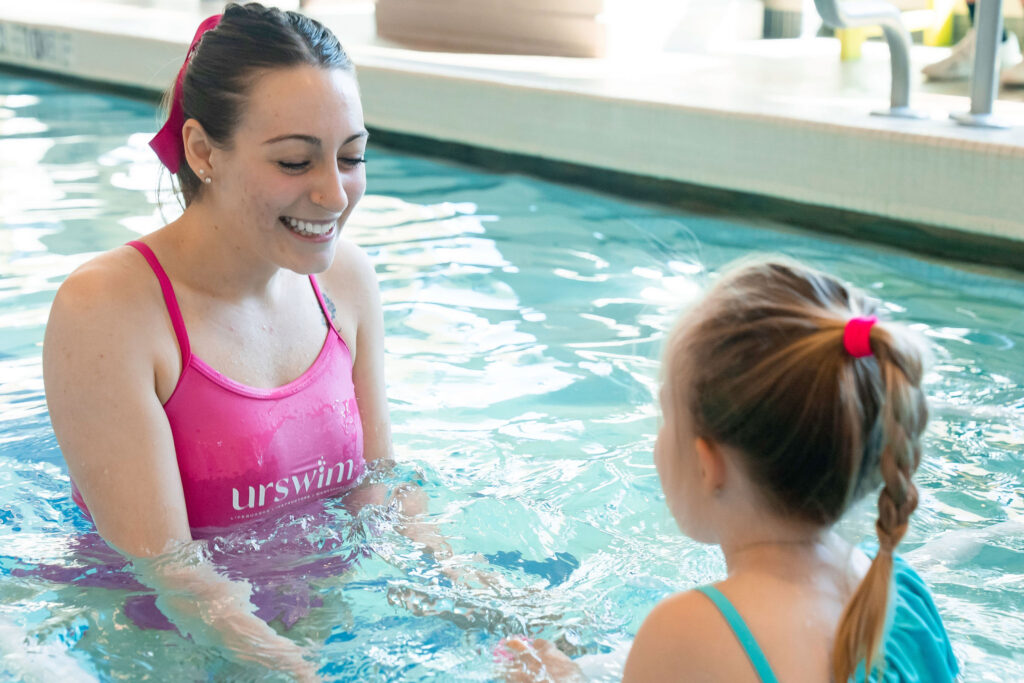
Then there’s focus. A smaller, indoor lesson means your child isn’t competing with a dozen splashing kids for an instructor’s attention. For a beginner especially, that setting is what turns a few weeks into real progress instead of a few weeks of treading water.
What a Summer Swim Class Actually Looks Like
If you’ve never watched a private lesson start to finish, it’s less structured-drill and more structured-play than most parents picture.
A typical summer swim class starts in the shallow end, feet on the bottom, instructor at eye level. For a nervous beginner, the first few minutes aren’t about swimming at all, but about the water feeling normal ( splashing, blowing bubbles, getting a face wet without it being a whole event). Only once that settles does the instructor introduce floating, then kicking, then the first real strokes.
For a kid with some experience, the lesson looks different from the first minute. Less warming up to the water, more warming up the stroke (arm position, breathing rhythm, the timing that makes freestyle actually efficient instead of exhausting). The instructor is watching closely and adjusting in real time, not running through a fixed script.
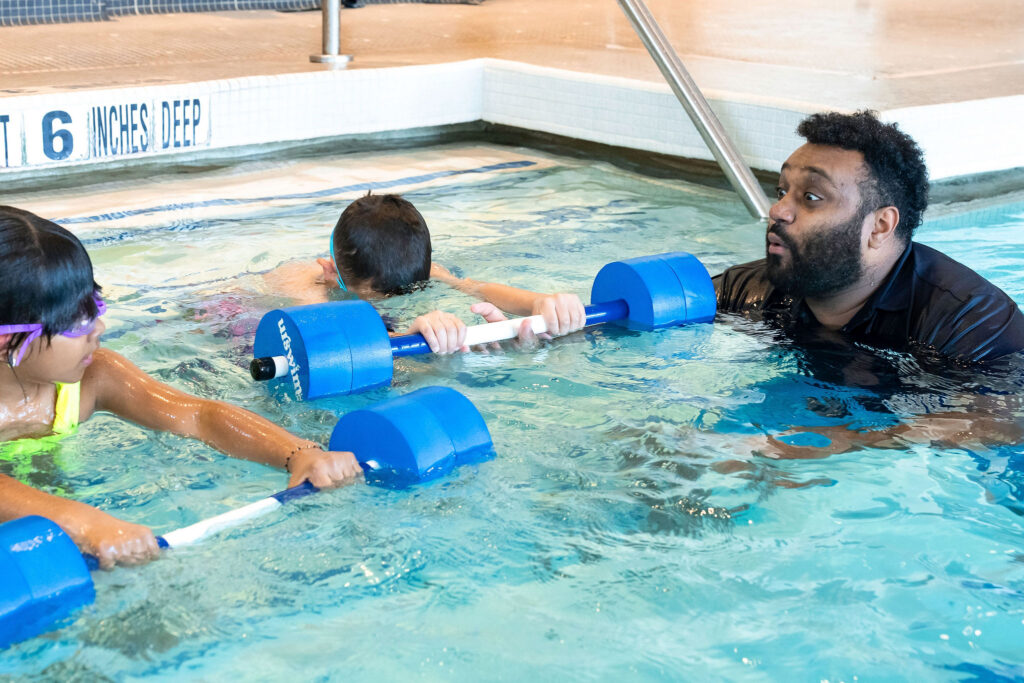
Thirty minutes, one instructor, one kid. That’s the whole model. No waiting for a turn, no losing five minutes to a slower group. Whatever your child needs that day is what the lesson becomes.
And every lesson ends the same way, regardless of level: something that feels like winning. A new distance swam unassisted. A jump off the step instead of the ladder. A stroke that finally clicked. Kids don’t stick with something that only feels like work. They stick with something that feels like progress they can point to.
A Goal Worth Swimming Toward: Join Us at the urSwim Olympics
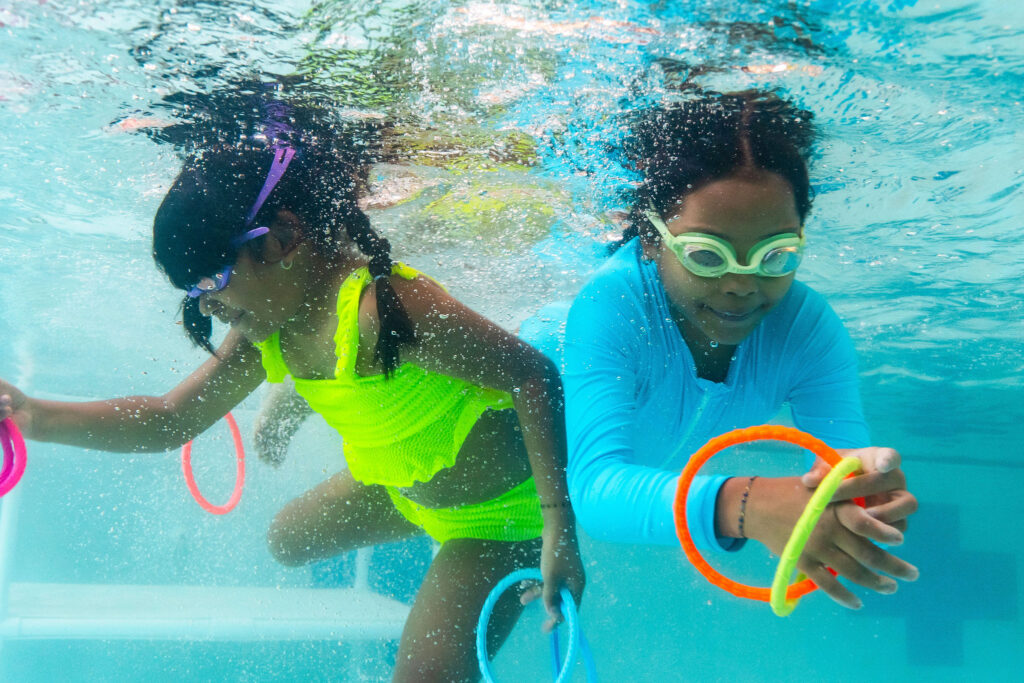
Here’s something to actually look forward to while those lessons are underway: the urSwim Olympics, our biggest community event of the year, open to every family, whether your kid has been swimming for years or started their first lesson last week.
The day kicks off with the Toddler Triathlon, built for our youngest athletes ages 2 to 5: a 25-yard swim, a half-mile bike, and a quarter-mile run, floats and training wheels welcome. From there, swimmers of all ages can jump into the All Ages Swim Meet, picking three favorite events from freestyle, butterfly, breaststroke, underwater swim, and kick. And for anyone who loves a little team spirit, the All Ages Swim Relay brings together swimmers across every age group for one last splash of friendly competition.
It’s going to be a full day of racing, cheering, and celebrating whatever progress your swimmer has made, whether that’s a first unassisted float or a personal-best 50.
It’s also for a good cause. Proceeds from the event support Step Into Swim, a national nonprofit working to make sure every child has access to life-saving swim lessons. Every family that shows up, competes, or just comes to watch is helping put swim lessons within reach for a kid who might not otherwise get them.
Whether you’re signing up to swim, coming to cheer from the sidelines, or interested in sponsoring the event for your business, you can find all the details here.
Frequently Asked Questions
Is it too late to start swim lessons in July?
No. With most Long Island and Connecticut schools starting after Labor Day, there are typically 6 to 8 weeks left in the season from mid-July. That’s enough time for real, visible progress, even if it’s not enough to turn a beginner into a competitive swimmer.
How many swim lessons does it take to learn to swim?
It depends on the starting point, but many complete beginners show real comfort in the water within 4 to 6 lessons. Kids with some swimming experience often see stroke improvement even faster, especially in private, one-on-one lessons.
Should summer swim lessons be indoors or outdoors?
Indoor lessons tend to hold up better in mid-to-late summer. They aren’t affected by heat, storms, or crowded outdoor pools, and instructor availability is usually more flexible once outdoor slots have filled up for the season.
What age should kids start swim lessons?
The American Academy of Pediatrics recommends most children can begin formal swim lessons around age 1 as one layer of drowning prevention. That said, kids progress at different rates, so readiness matters more than a strict age cutoff.
Can adults start swim lessons mid-summer too?
Yes. It’s never too late for an adult to start, whether the goal is basic water comfort or refining strokes before summer wraps up. Private lessons make it easy to build a schedule around work and family commitments already in place.
Ready to Start?
Summer isn’t over. Not for the pool, and not for your kid’s swimming.
A few weeks from now, you could be watching a completely different swimmer than the one you’re watching today. Steadier. More willing. Actually enjoying the water instead of gripping the edge of it. That shift doesn’t happen by waiting for next spring. It happens by starting now, with whatever time is actually left.
If this is the second summer in a row this thought has crossed your mind, here’s the one honest tip we’ll leave you with: next year, start in spring, before the rush. But this year, mid-July is still a great time to begin.
Schedule your child’s first lesson and see how much progress is possible before the season winds down. And if you’d like a fun milestone to work toward together, keep an eye out for our annual urSwim Olympics, a full day of races, relays, and community celebration for swimmers of every level, with proceeds supporting water safety access through Step Into Swim.


No matter your swimming goals, urSwim's indoor swim classes in Fairfield County, CT and Long Island, NY can help you get there, stroke by stroke.

Start Swimming with urSwim!


